
Pass the Aux is for the moment at a party when someone says “let me put on a song”. Instead of handing a phone around, one person takes the booth, everyone else scans a QR code, and the music becomes something the whole room builds together. Little DJ skill needed: everyone can suggest, the DJ decides.
Who it’s for
Friends at a house party, a birthday or a barbecue, with one laptop hooked up to the speakers. It is made for the rest of us, not for club DJs.
Features
- Two decks in the browser. Waveforms, cue, one-click tempo sync, a pitch nudge, three-band EQ per channel and an equal-power crossfader.
- Automatic tempo and beat detection for every track, worked out once and remembered.
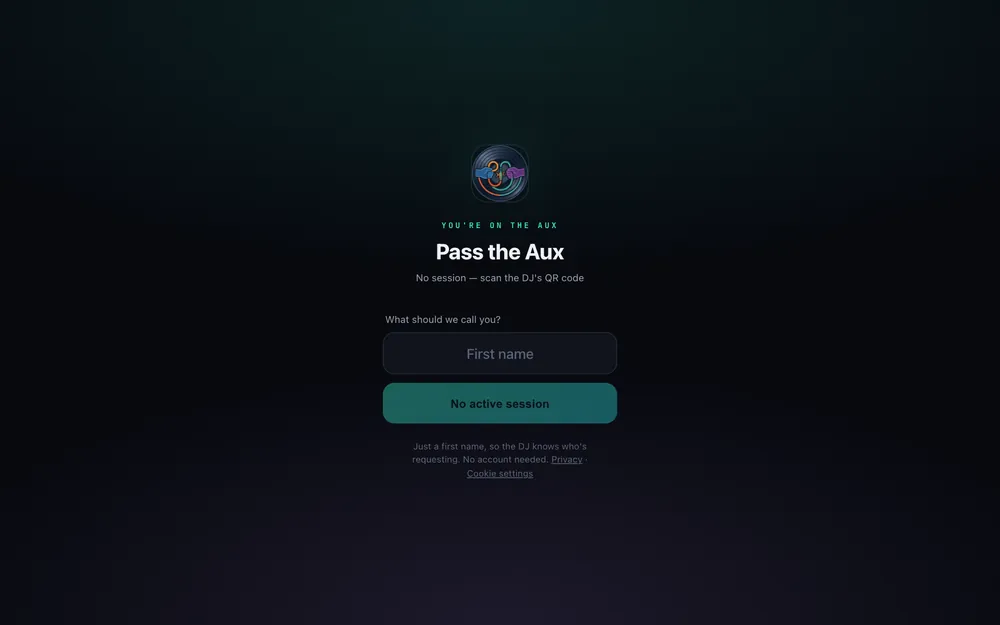
- Requests from the room. Guests scan the DJ’s QR code, give a first name and suggest tracks or vote from their phone. No account, no app.
- Queue and automix. The next track is loaded on the idle deck and crossfaded in when it’s time, so the music keeps going while the DJ dances.
- Effects for beginners: an XY pad with filter, echo, reverb and more, one-touch macros and a sample pad.
- Headphone pre-listening on a separate output, if your computer has one.
- Your own music. Add your own audio files to a private library, drag a file straight onto a deck, or search record stores you connect yourself.
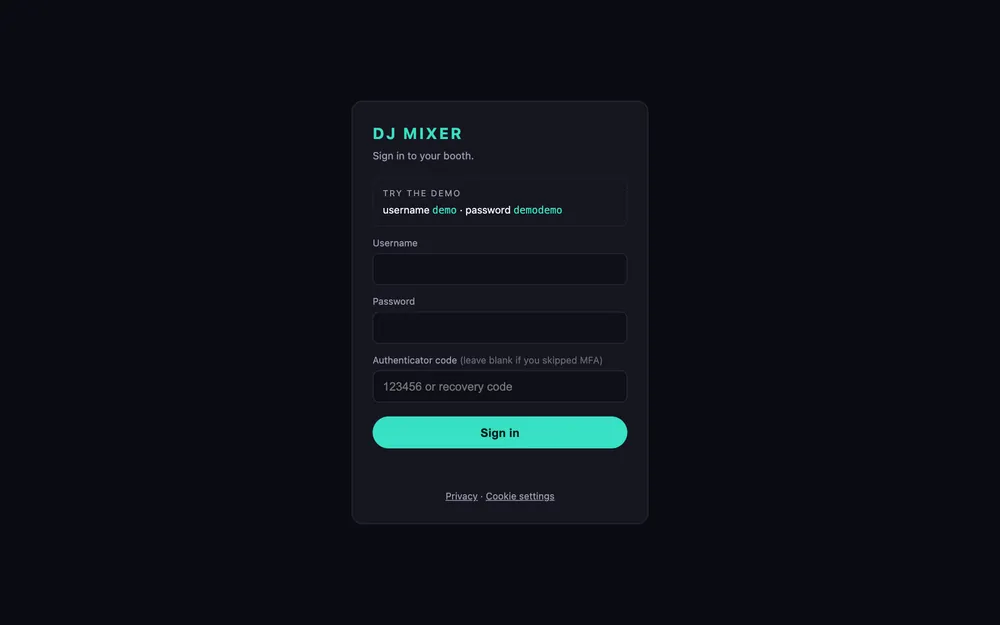
There is a demo account on the sign-in page to try it with a few tracks.
Companion projects
Pass the Aux works on its own. Two optional companions, also open source, make it nicer:
- pass-the-beat analyses songs with a beat-tracking model, for beat grids that land far more accurately than the in-browser detection.
- pass-the-remote is a remote record store: it puts your own music folder online so Pass the Aux can search it from wherever the party is.
Privacy
Guests don’t need an account: the first name they give, their requests and their votes are shared with the DJ and the other guests of that party, and a party lives only in the server’s memory. A DJ’s account holds a username, a password stored only as a hash, and their own private library. To fill in cover art and track details, the server may look up a track’s artist and title in public music databases, without anything about you. No ads, no selling of data; analytics only if you accept them. The details are in the privacy policy.
Open source
Pass the Aux is open source under the MIT licence: the code is on GitHub, with a Docker setup to run your own.
Made by
Made in Belgium by Marijn Vandevoorde, as Small Victories BV.